

Are You Leaving Free Money on the Table?
I see it every single day. Hardworking people put their money into basic bank accounts, cross their fingers, and hope they will magically build wealth. You check your balance after a few months, and nothing has changed. Your money feels completely stagnant. This lack of progress creates massive financial anxiety. You might even wonder if the game is rigged against you.
When you rely on bad financial information, you struggle unnecessarily. Let us look at why this happens:
- You lose the hidden power of time working in your favor.
- Inflation silently eats away at your purchasing power.
- You miss out on the most powerful wealth-building tool available to everyday people.
- You feel stressed because you are working for your money, rather than making your money work for you.
Poor financial strategies destroy your peace of mind. When you do not see your account balances increasing, you lose confidence in your future. You might start making risky investments out of desperation. Conversely, when you understand the exact mathematical principles of wealth creation, your anxiety disappears. You gain complete control over your destiny. You sleep better at night knowing your money multiplies on its own.
The secret to this peace of mind is surprisingly simple. You just need to understand how compound interest helps your savings grow over time. Once you grasp this concept, everything about personal finance becomes incredibly clear.

Breaking Down the Mechanics of Wealth Generation
Let us start with the basics. What exactly is compound interest? In my experience, banks deliberately make this concept sound complicated. They use fancy jargon to confuse everyday consumers. However, the definition is incredibly straightforward.
Compound interest is simply the interest you earn on your original money, plus the interest you earn on your accumulated interest.
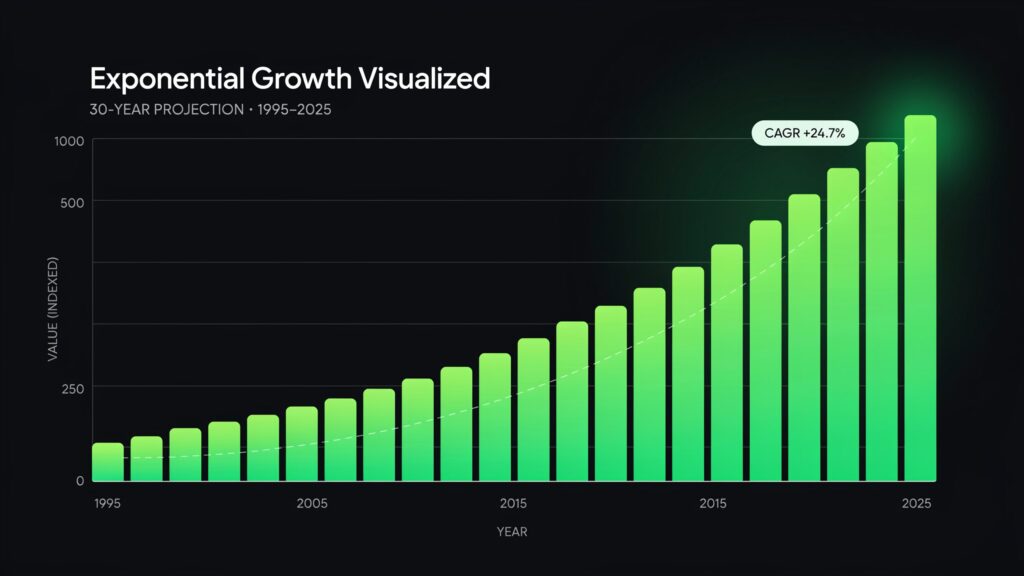
Imagine a snowball rolling down a snowy hill. At first, the snowball is small. As it rolls, it picks up a little bit of snow. Then, that new snow picks up even more snow. By the time it reaches the bottom of the hill, the snowball is massive. Your money works the exact same way. When your bank pays you interest, that new money gets added to your total balance. The next time the bank calculates your interest, they base it on that new, larger balance.
Simple Interest Versus Exponential Growth
To truly appreciate compound interest, you must understand its weaker cousin: simple interest. Simple interest only pays you based on your original deposit. We call this original deposit your principal investment.
If you invest $10,000 at a 5% simple interest rate for ten years, you earn $500 every single year. At the end of ten years, you have $15,000. Your money grew in a straight, flat line.
Now, look at compound interest. If you invest that same $10,000 at a 5% rate that compounds annually, the math changes completely. In year one, you earn $500. Your new balance is $10,500. In year two, you earn 5% on $10,500, which gives you $525. Your new balance becomes $11,025. By year ten, you have $16,288.
You literally earned an extra $1,288 for doing absolutely nothing. The longer you leave the money alone, the more aggressive the growth becomes. This is exactly how compound interest helps your savings grow over time.
The Mathematical Formula Behind the Magic
You do not need a degree in advanced mathematics to figure this out. However, knowing the formula gives you a massive advantage. Financial professionals use a specific equation to predict future wealth.
The formula is: A = P (1 + r/n)^(nt)
Do not let the letters intimidate you. Here is what they actually mean:
- A stands for the final Amount you will have.
- P is your Principal investment (your starting money).
- r is the annual interest rate (written as a decimal).
- n is the number of times the interest compounds per year.
- t is the total time in years you leave the money invested.
The most important variable in this entire equation is time. Notice how the letter “t” sits in the exponent position? That placement creates exponential growth. Time acts as the ultimate multiplier for your money.
If you want to understand how these formulas apply to the money you owe, you can practice calculating your mortgage payoff timeline. The same mathematical rules that build your wealth can also keep you in debt if you sit on the wrong side of the equation.
Case Study – The Early Saver Advantage
I want to share a real-world scenario. I’ve seen many people make this mistake, and it costs them hundreds of thousands of dollars. Let us look at two friends, Emma and John, to see exactly how compound interest helps your savings grow over time.
Emma understands the power of compound interest. At age 25, she starts investing $300 every single month into an account earning an 8% annual return. She does this for just ten years. When she turns 35, she stops contributing completely. She never puts another dime into the account. In total, Emma invested $36,000 of her own money. She leaves the account alone until she turns 65.
John decides to wait. He wants to buy a nice car and travel in his twenties. He finally starts investing at age 35. To catch up, John also invests $300 a month at the exact same 8% return. However, John keeps investing $300 every single month for thirty straight years until he turns 65. In total, John invested $108,000 of his own money.
Who ends up with more money at age 65?
Emma retires with roughly $560,000. John retires with roughly $440,000.
Read that again. Emma invested $72,000 less than John. She stopped contributing at age 35. Yet, she ended up with $120,000 more in total wealth. This happens because Emma gave her compound interest ten extra years to multiply. Her money started making its own money much earlier. According to the Securities and Exchange Commission (SEC), starting early is the single most effective way to build long-term wealth.
Myth Versus Reality in Personal Savings
Financial misinformation spreads rapidly on the internet. People believe dangerous myths about saving money. Let us destroy some of these myths right now so you can focus on the truth.
Myth 1: You need thousands of dollars to start earning compound interest.
Reality: You can start with just fifty dollars. The math works exactly the same whether you have one hundred dollars or one million dollars. The percentage of growth remains identical. Waiting until you feel “rich” to start saving guarantees you will never actually become rich.
Myth 2: Traditional bank accounts offer great compound interest.
Reality: Most massive national banks pay practically nothing. They might offer a 0.01% interest rate. At that rate, it would take you thousands of years to double your money. You must actively search for High-Yield Savings Accounts (HYSAs) or index funds to see real exponential growth.
Myth 3: You have to monitor your money constantly to make it grow.
Reality: Compound interest thrives on boredom. The less you touch your money, the faster it grows. Constantly moving your funds around resets the compounding clock. The most successful investors set up automatic transfers and simply forget about the account.
The Psychology of Earning Interest
Many people ignore the psychological benefits of compound interest. When you finally see your money working for you, a massive mental shift occurs. You stop viewing your paycheck as your only source of income.
During the first few years, the growth feels slow. You might only earn ten or twenty dollars a month in compound interest. Your brain tells you this is a waste of time. However, if you push through this initial boring phase, the math explodes. By year ten or fifteen, your compound interest might start paying you more than your actual job does in a single week.
This realization completely changes your spending habits. Once you understand how compound interest helps your savings grow over time, buying an expensive coffee feels different. You realize that spending twenty dollars today actually costs you one hundred dollars in future retirement money. You naturally become more disciplined without feeling deprived. You are trading short-term junk for long-term freedom.
Advanced Tactics to Maximize Your Wealth Growth
Now that you understand the basic mechanics, we need to talk about optimization. You do not just want average returns. You want to extract every single penny of compound interest available to you.
Professionals use specific tactics to force their money to grow faster. These strategies require very little effort, but they produce massive results over a long timeline. Let us review the best ways to manipulate compound interest in your favor.
Increase Your Compounding Frequency
Remember the letter “n” in our mathematical formula? That letter represents compounding frequency. It dictates how often the bank pays you interest.
Some financial institutions calculate and pay your interest once a year. We call this annual compounding. Others calculate it every single month. The best institutions calculate your interest every single day. Daily compounding always beats monthly compounding, and monthly compounding always beats annual compounding.
When your interest compounds daily, you earn a tiny fraction of a percent every 24 hours. The next day, you earn interest on yesterday’s interest. Over thirty years, a daily compounding schedule will generate thousands of extra dollars compared to an annual schedule. Always read the fine print before opening an account. Look specifically for the words “compounds daily.”
Focus on the Annual Percentage Yield (APY)
Banks use two different numbers to advertise their accounts: the Interest Rate and the Annual Percentage Yield (APY). You must completely ignore the interest rate and focus entirely on the APY.
The standard interest rate only tells you the basic flat rate. It does not factor in the compounding frequency. The APY gives you the true, exact mathematical return you will receive over a full year, including the effect of compound interest. A bank might advertise a 4.5% interest rate but offer a 4.6% APY because the account compounds daily. Always compare financial products using the APY.
Automate Your Contributions
Human beings are naturally emotional creatures. If you rely on willpower to save money, you will eventually fail. You will have a bad day, decide to buy something expensive, and skip your monthly savings contribution.
To guarantee that compound interest works properly, you must remove human emotion from the process. Set up an automatic transfer from your checking account to your savings account. Schedule this transfer for the exact day your paycheck arrives. You cannot spend money that you never see.
If you struggle to find extra cash for these transfers, I highly recommend spending an hour creating a simple monthly budget. A good budget acts as a roadmap, showing you exactly where you can cut unnecessary expenses to feed your compound interest accounts.
Reinvest Every Single Dividend
If you invest in stocks or index funds to generate compound interest, you will likely receive dividends. Companies pay these dividends as a reward for holding their stock. Many amateur investors take these dividends as cash and spend the money. This destroys your exponential growth curve.
You must enroll in a Dividend Reinvestment Plan (DRIP). This program automatically takes your cash dividends and buys more shares of the stock. Those new shares will then produce their own dividends in the future. This creates a secondary layer of compound interest that aggressively accelerates your wealth accumulation.
The Dual Nature of Interest: Wealth and Debt
We have focused heavily on how compound interest builds your personal wealth. However, you must respect the dark side of this mathematical law. Compound interest is entirely neutral. It simply multiplies whatever balance sits in front of it.
When you owe money to a credit card company, the bank uses compound interest against you. Your unpaid debt earns interest. The next month, the bank charges you interest on your original balance plus the new interest charge. Your debt spirals out of control rapidly.
This is exactly why paying the minimum balance on a credit card keeps you trapped in poverty for decades. If you hold toxic, high-interest debt, you must destroy it immediately. You can use tools for making extra mortgage payments to see how paying off debt early saves you massive amounts of negative compound interest.
Every dollar you pay in interest to a bank is a dollar that cannot earn compound interest for your own family. You want to earn interest, never pay it.
Common Pitfalls That Destroy Exponential Growth
Even smart people make critical errors that interrupt their compound interest. If you want to build lasting wealth, you must memorize these common mistakes and avoid them at all costs.
Waiting for the Perfect Time to Start
I hear people say, “I will start saving when I get a raise,” or “I will start investing when the economy improves.” There is no perfect time. Every day you wait, you lose money. Compound interest demands time above all else. Start today with whatever small amount you have available.
Interrupting the Compounding Process
Some people do a great job saving money for five years. Then, they decide to pull the money out to buy a fancy boat or take a luxury vacation. They think they can just start over. You cannot start over without resetting the timeline. When you drain the account, you kill the snowball. You force your money back to square one. Leave your primary compound interest accounts completely untouched until retirement.
Ignoring Hidden Financial Fees
Fees act as a parasite on your compound interest. If your account charges a 1% annual management fee, that sounds tiny. However, over thirty years, that 1% fee will consume hundreds of thousands of dollars of your potential wealth. The fee compounds just like your interest does. Always hunt for zero-fee accounts or ultra-low-cost index funds.
Failing to Account for Inflation
Inflation is the silent thief of purchasing power. If your savings account pays a 2% APY, but inflation runs at 3%, you are actually losing money in real terms. Your balance goes up, but your ability to buy groceries goes down. To experience true wealth generation, your compound interest rate must consistently beat the rate of inflation.
Taxes and Compound Interest
You must protect your compound interest from taxes. In a standard savings account, the government taxes your interest earnings every single year. This yearly tax drag slows down your exponential growth.
To bypass this problem, smart savers use tax-advantaged accounts like a Roth IRA. In a Roth IRA, your money grows completely tax-free. You never pay taxes on the compound interest generated inside the account. This legal tax shelter allows your money to compound at maximum speed without the government taking a yearly cut.
If you want to estimate the long-term impact of interest on major loans, I suggest estimating your long-term interest costs to understand exactly how much money goes to taxes versus principal.
Your Action Plan for Tomorrow
Reading about financial theory means nothing if you do not take immediate action. You now understand exactly how compound interest helps your savings grow over time. Let us put this knowledge into practice right now.
Follow this strict checklist within the next 24 hours:
- Log into your current bank account and locate your exact APY. If it sits below 4%, you are losing money to inflation.
- Research three high-yield savings accounts online and open the one with the highest daily compounding APY.
- Set up an automatic, recurring transfer from your checking account to your new compound interest account. Start with just $50 a week if necessary.
- Commit to leaving this money completely untouched for the next ten years.
- If you have high-interest credit card debt, redirect your extra cash to destroy that debt first before focusing heavily on savings.
Financial freedom does not happen by accident. It requires deliberate, mathematical planning. Let the power of compound interest do the heavy lifting for you.
Frequently Asked Questions (FAQs)
How often should interest compound for the best results?
Interest should compound daily for the absolute best financial results. When an account compounds daily, your money earns a tiny fraction of interest every 24 hours. The next day, you earn interest on that new, slightly larger amount. Over several decades, a daily compounding schedule generates significantly more wealth than accounts that only calculate your interest on a monthly or annual basis.
Can you lose money with compound interest?
You cannot lose your principal money in a standard compound interest bank account. Savings accounts and Certificates of Deposit (CDs) hold strict protections. If you use a bank insured by the Federal Deposit Insurance Corporation (FDIC), your money remains completely safe up to $250,000. However, if you invest in the stock market to earn compounding returns, the value of your portfolio will fluctuate, meaning you could temporarily lose money during market downturns.
How much money do I need to start compounding?
You can start earning compound interest with as little as one dollar. Most modern online banks have removed all minimum deposit requirements. The mathematical formula applies exactly the same way to small amounts as it does to large fortunes. The most critical factor is starting as early as possible, regardless of the size of your initial deposit.
What is the rule of 72 in finance?
The Rule of 72 is a simple mathematical shortcut used to estimate how long it takes to double your money. You divide the number 72 by your annual interest rate. For example, if your account earns an 8% compound interest rate, you divide 72 by 8. The result is 9, meaning your money will completely double every nine years without you adding another dime.
Does compound interest work with debt too?
Yes, compound interest works aggressively against you when you hold debt. Credit card companies use compound interest to maximize their profits. They charge you interest on your unpaid balance, and the next month, they charge you interest on the previous interest. This creates a rapid debt spiral that becomes mathematically difficult to escape if you only pay the minimum balance.
How does inflation affect my compounding savings?
Inflation actively reduces the real-world buying power of your compound interest. If your savings account generates a 4% return, but the cost of groceries and housing goes up by 3% that year, your true wealth only grew by 1%. You must place your money in vehicles that offer an interest rate higher than the current inflation rate to experience actual financial progression.
Where can I find accounts that offer compound interest?
You can find compound interest accounts at almost any financial institution, but the highest rates live online. Traditional brick-and-mortar banks have massive overhead costs, so they offer terrible interest rates. Online-only banks avoid these expenses and pass the savings to you through High-Yield Savings Accounts (HYSAs). You can also earn compounding returns by opening a brokerage account and investing in broad-market index funds.
The information provided in this article is for educational and informational purposes only. It does not constitute professional financial, investment, tax, or legal advice. The content on Nxfly Finance (nxfly.com) is intended to help you understand general financial concepts and should not be used as a substitute for personalized advice from a qualified financial advisor, CPA, tax professional, or licensed attorney.
Every individual’s financial situation is unique. Results, outcomes, and experiences discussed or implied in this article may vary significantly based on your personal circumstances, income, credit profile, location, and market conditions. No financial outcome, return, or result is guaranteed.
Nxfly Finance does not endorse, promote, or recommend any specific financial product, service, lender, institution, or investment. Any tools, calculators, or estimates provided on this website are for illustrative and planning purposes only and should not be solely relied upon for making financial decisions.
Always conduct your own due diligence and consult with a licensed financial professional before making any financial, investment, or borrowing decisions. By reading and using this content, you acknowledge and agree that Nxfly Finance and its authors are not liable for any financial decisions made based on the information provided here.
For more information on financial regulations and consumer protections in the United States, visit the Consumer Financial Protection Bureau (CFPB) or the U.S. Securities and Exchange Commission (SEC).